Go to Google and do a search for ‘resume’ (or ‘CV’).
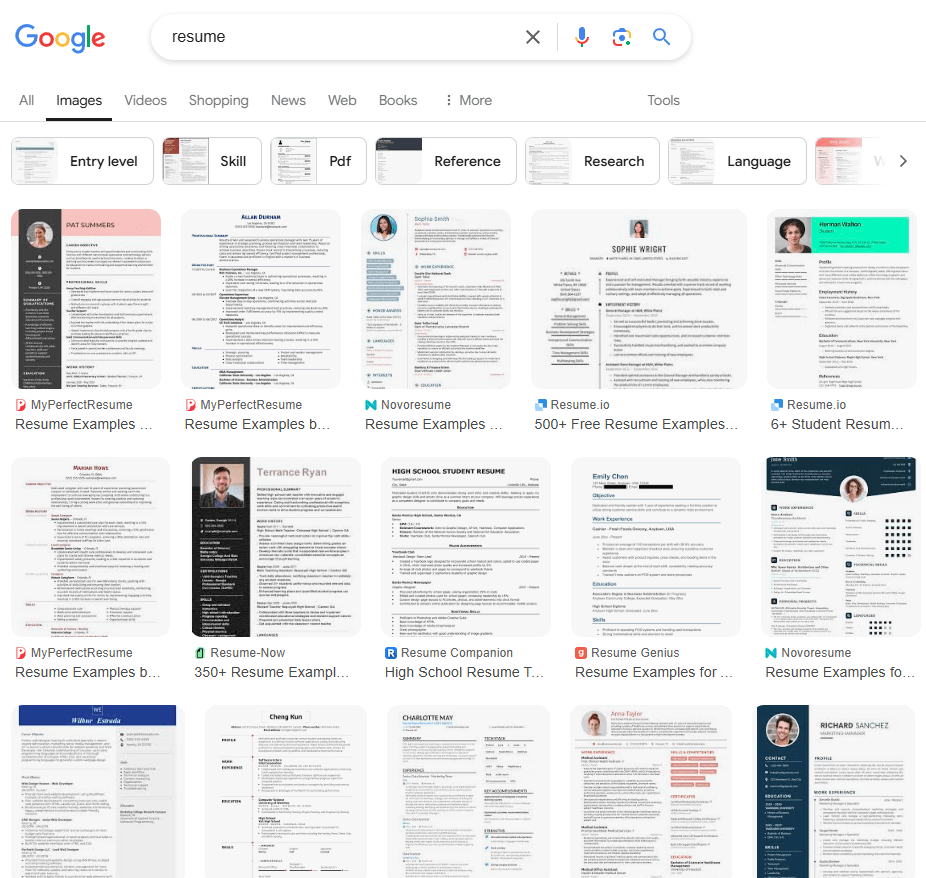
Have a read of the examples that is in front of you. You will see headings like ‘education history’, ‘previous employment roles’, ‘profiles’, and to a lesser degree ‘skills’ and ‘achievements’. Alot of these resumes are quite standard and to some degree plain and boring. Now imagine a recruiter trying to select an ideal candidate for IT position based on these resumes. None of these resumes show anything outstanding or out of the ordinary. Sure the recruiter will call you discuss with you why you applied for the role, why you are a good fit and how you can add value to the employer etc etc.
But if you added a little extra to the resume, extra things like, “I have been viewing YouTube videos on how to create a website and host in AWS”, or “I have signed up for a trial account with New Relic and did some of their introduction exercises” or “I have read the topic of ITIL to understand how to manage IT services, incidents and problems.” Now the recruiter I can see some interest and proactive work outside the usual norms.
This extra research and learning outside the usual education streams will get your resume through the front door faster.
Below are some examples of extra learning items that can be added to your resume or cover letter.
(Of course if you put these suggestions down you actually will need to prove that you are doing these items).
- Create a heading on your resume called ‘Extra Learning’ or if you are planning to add your extra learnings to your cover letter, make sure it’s emphasised clearly.
- “I have big interest in Cloud Computing, specifically in AWS. I have been watching this YT channel, https://www.youtube.com/c/TinyTechnicalTutorials which shows me various Lambda, ECS and web building tutorials of which I have managed to follow and build my own projects.”
- Note – I have no affiliation with the YT channel above. I use this resource for my own learning and have found this channel very helpful.
- “I have signed up for a free demo account with a monitoring and observability resource called New Relic. I have followed their demo’s on how to setup agents on systems and navigate around the user interface.”
- “In order to pursue my interests in DevOps, I have purchased a Udemy subscription and watched various online courses covering continue delivery and development, Docker and Kubernetes, DevSecOps and IT service management. These online courses have provided me a much broader scope of the IT industry.”
- “I have purchased the latest ITIL V4 Foundation book to better understand the admin and service management side of IT.”
Summary
- Add extra proactive learning items to your resume to gain immediate attention from the recruiter or IT professional
- Make sure it’s either on the cover letter or front page of the resume.
- (I usually dedicate the first page of my resume showing my proactive learnings and achievements. leaving the second page for my education history and past employment roles).
- Make sure it’s either on the cover letter or front page of the resume.
- Do some basic research of the tools, systems of the IT field you want to enter in and make sure you add everything you have learned.
- E.g. “I learned how to configure a router”
- “I created a test account to perform some dev activities”
- “I signed up to such and such online course to learn more about AWS.”
- E.g. “I learned how to configure a router”
- Emphasise you have practiced these tools and systems and have a general understanding of what the tools and systems do.
- You can also search online, a statement like the following ‘what tools do network engineering use’ or ‘what tools do developers use for aws projects’ etc.
 Alt+Ctrl+Start