This post is related to https://infotechmentor.com/2025/03/25/how-do-i-prepare-for-a-jnr-associate-entry-l1-level-it-job-pt-1/. Have a read of pt 1 to get a grasp of this article.
Note – this article is to guide grads or new comers to IT a pathway into an entry level role. This article is not how you will deliver an interview or cover every aspect of the application.
Ok so you’ve seasoned yourself on some IT learning. You’ve researched some basics (not 100% technical) on some functions on a website, shopping cart, cms, learned how to use a ticket system or accustomed to watching some IT lingo on YT. The next step is to look for roles / jobs that may suit your learning.
I would suggest looking at L1 roles. Below are some examples of possible L1 / entry level roles into IT.

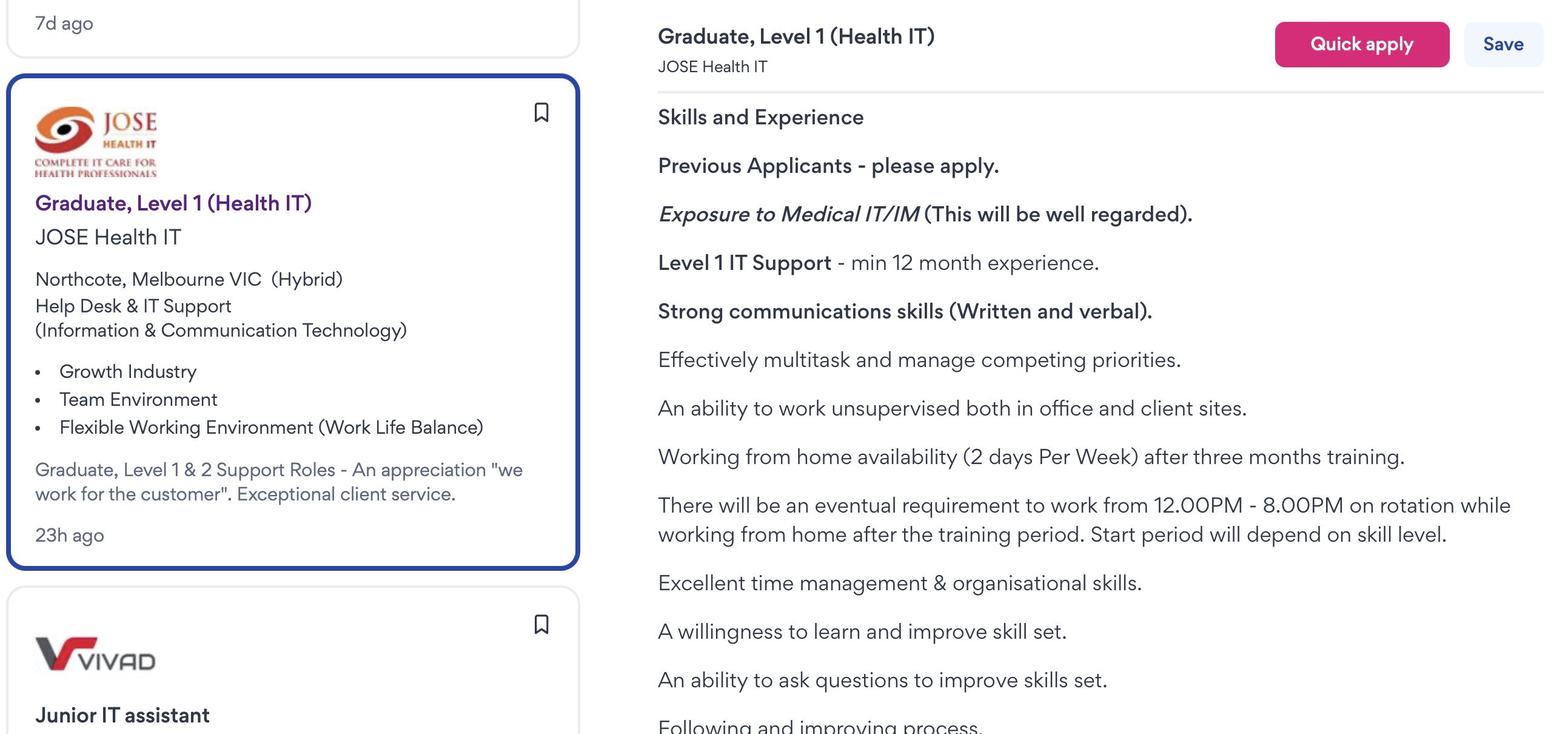
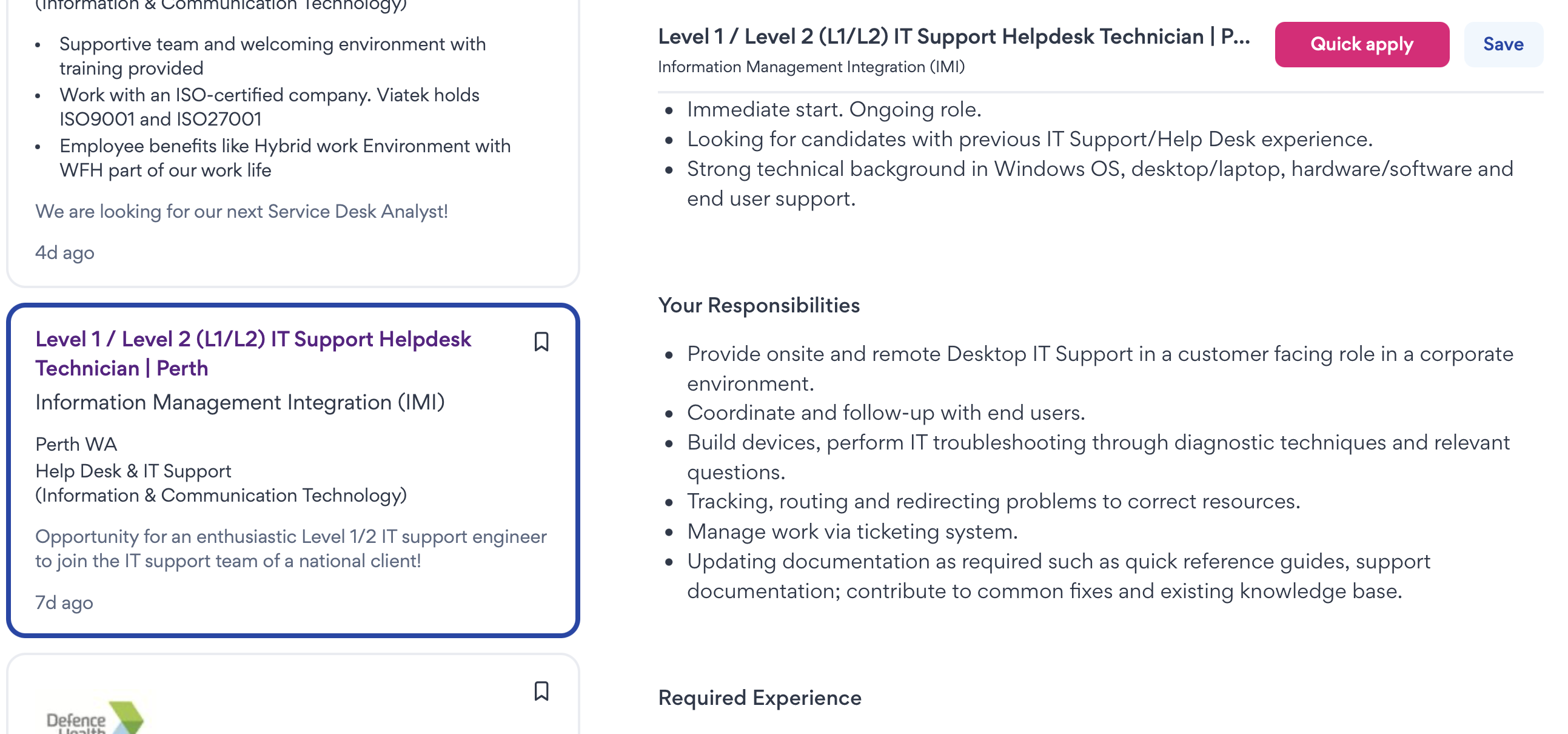
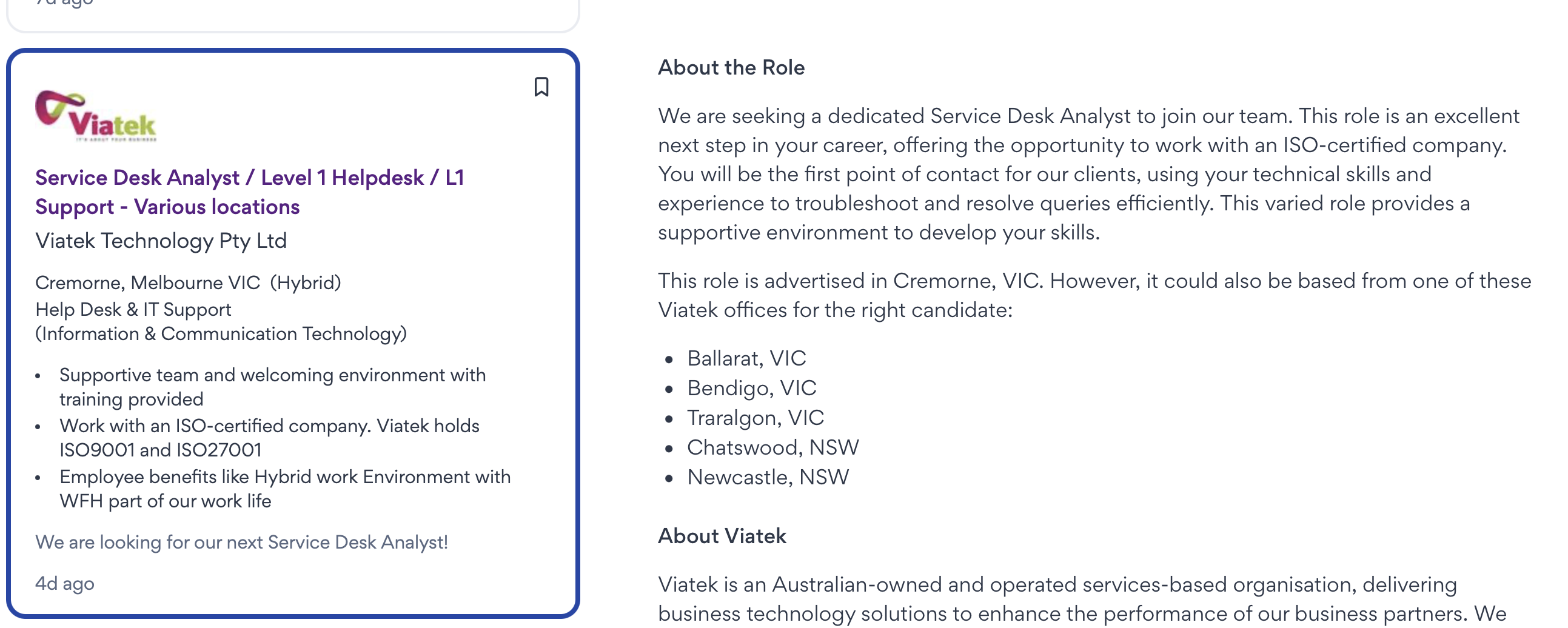
- (The 4 screenshots above we’re obtained via seek.com.au)
- Note – I have chosen these 4 roles as examples. I have no affiliation with the companies offering the roles above.
- Across these 4 examples, some mention documentation or improvement skills are required
- These are easy skills you can build straight away or apply to this role
- I’ve emphasised a few times in other posts to build your documentation skills.
- Remember to use dot points; indent and cascade them down if you have follow up inquiries
- (Indent and cascade example is similar to what I do on this post).
- These are easy skills you can build straight away or apply to this role
- Although some of these roles do ask for some experience a way to overcome this experience is to research the possible tools and systems for these roles
- E.g. ServiceNow or Jira are common ticketing systems used in IT. You can begin familiarising yourself by watching users on YT and seeing others how they use these tools or read the documentation online.
- Some of these roles also mention face to face / phone contact with customers or end users.
- You can begin researching some common questions to these roles.
- E.g.
- “What are some IT questions related to troubleshooting”
- “How do I reset a password using Active Directory”
- Document the steps on how to reset a password
- You can put this on your resume
- “What are good documentation techniques and can you provide some examples”
- “Provide me some common setups for IT networking devices at a small / medium business”
- You can further get into some of the detail and ask questions like, “how to log into a router.” Again you may not know how to do it 100% but if you respond to the interviewer a statement like, “Although this is my first L1 role I have researched into logging into routers to troubleshoot networking issues. After logging into the router I can use a ping or nslookup command to identify the networking issue.”
- This will go along way in showing your determination and willingness to learn
- The questions above should give you insight on what you will be dealing with in these roles
- These roles will involve some collaboration with internal employees and users
- As a follow up to the example questions above you can ask the interviewer some deeper questions
- E.g. Are these systems in the cloud, on premise or run by a vendor
- Do I or can I collaborate with other users in L2 roles to improve /expand my learning
- Is my role able to expand and grow into other higher roles in the organisation
- E.g. Are these systems in the cloud, on premise or run by a vendor
- As a follow up to the example questions above you can ask the interviewer some deeper questions
Summary:
- After you have identified some roles and researched some of the tools/systems and questions that might be presented to you, this should give you a bit more confidence in applying for the role
- (However please note, this post is to support you in getting the role. You may not 100% get that desired role. There is no silver bullet or secret sauce in applying for jobs/roles)
- Sure you may not have the whole rounded experience required, but doing this simple / early preparation will give you an edge ahead of other grads or new comers also applying for those roles
 Alt+Ctrl+Start